Climate Targets and Transition Plans

ESG News Letter

Email address is required !

Email address is invalid !

Sending...

Error, please try again later

${ responseMsg }

Contact Us

If you have any questions, comments or suggestions regarding ESG, please contact us.
Email: ESG@wistron.com

Climate Targets and Transition Plans

Climate Targets and Transition Plans

Climate Targets and Transition Plans


Climate Commitments and Targets


Science-based targets, SBT

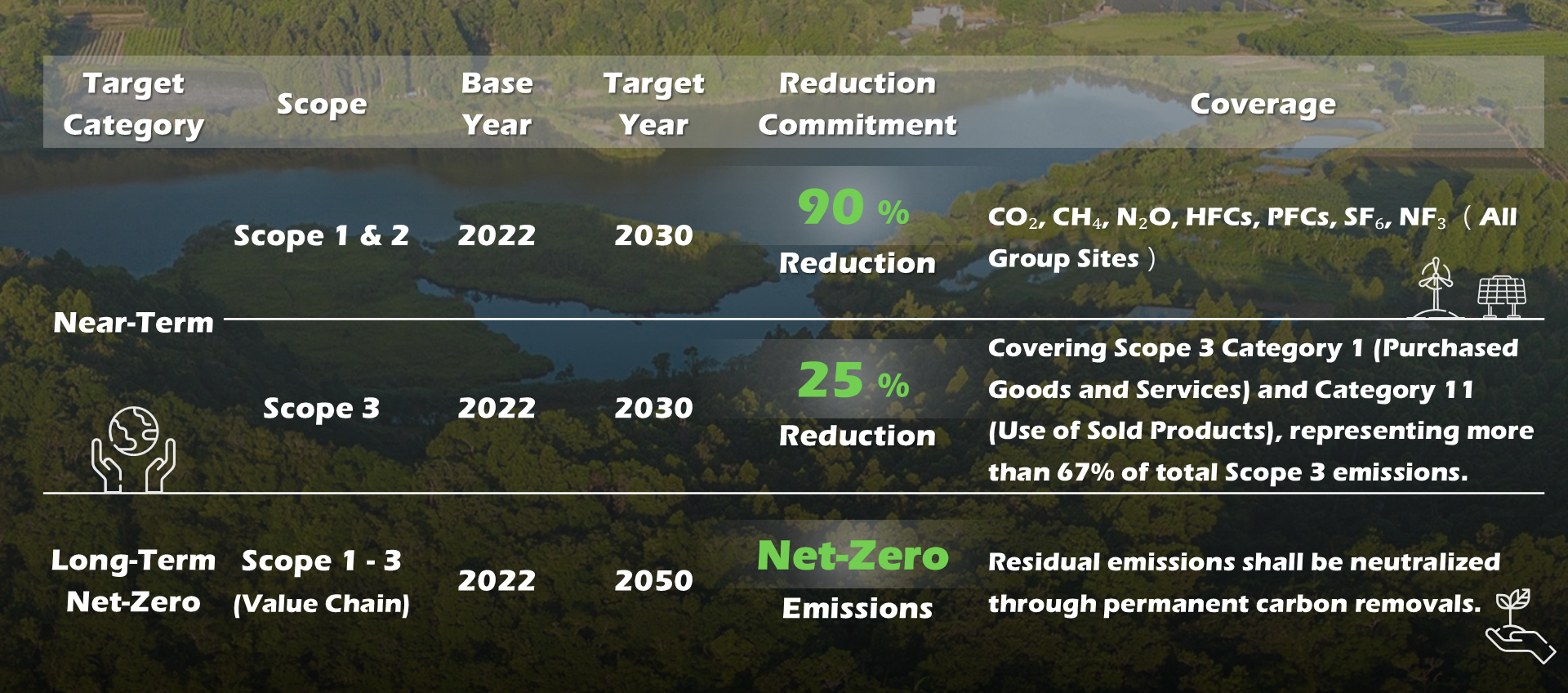
In April 2024, Wistron’s science-based targets were validated by the Science-based Targets initiative (SBTi), and now align with the Paris Agreement’s efforts to contain global warming to a maximum of 1.5°C above pre-industrial levels. We commit to achieving carbon neutrality across Wistron’s operations by 2030 and net-zero emissions across the value chain by 2050, and have set both near-term and long-term targets to such ends.
"We commit to achieving operational carbon neutrality for Wistron by 2030
and net-zero greenhouse gas emissions across our value chain by 2050."


Climate Transition Pathway and Strategy


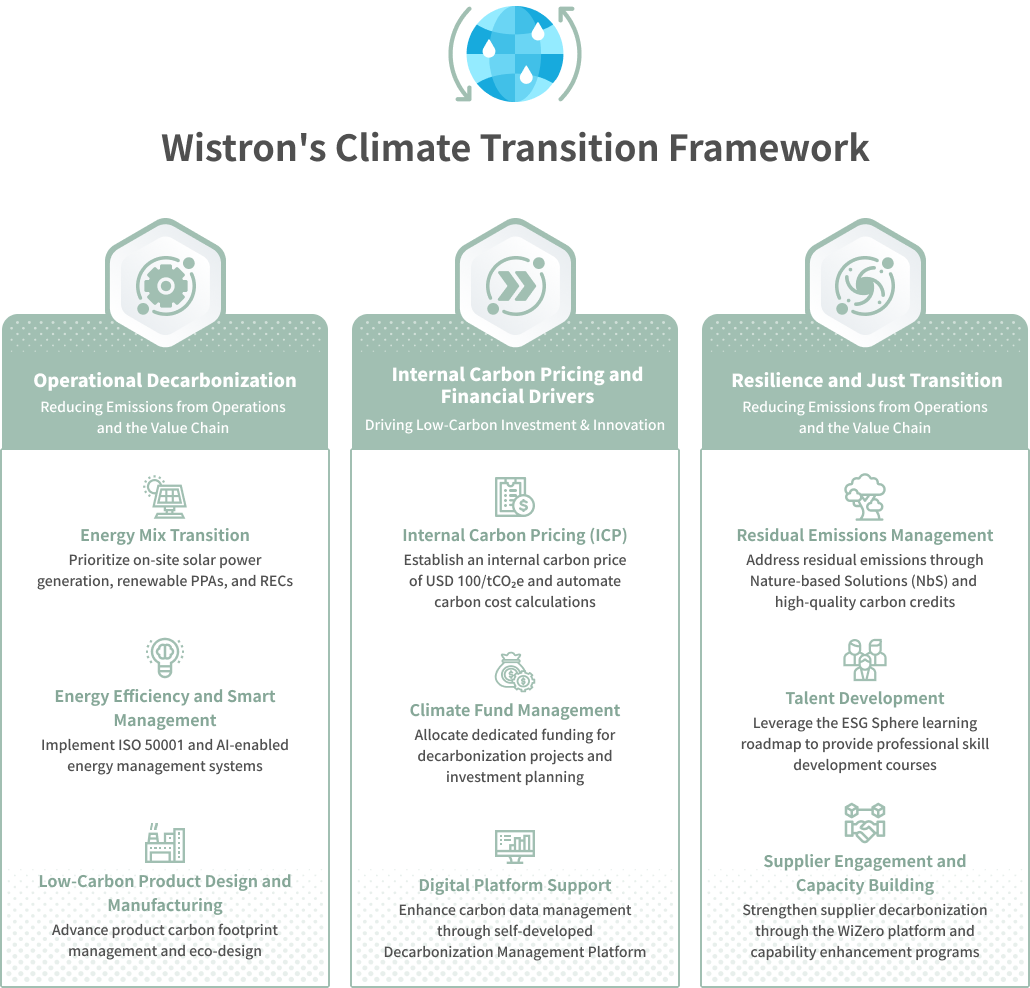
To ensure that our transition pathway remains feasible and resilient, our climate strategy is built around three key aspects: Operational Decarbonization, Internal Carbon Pricing and Financial Drivers, and Resilience and Just Transition. Guided by the principle of “prioritizing substantive emissions reductions within the value chain,” Wistron continuously reduces Scope 1, Scope 2, and Scope 3 GHG emissions through measures such as increasing renewable energy use, improving energy efficiency, developing low-carbon products, and implementing an internal carbon pricing mechanism. For residual emissions that are technically or currently difficult to eliminate, Wistron plans to utilize Beyond Value Chain Mitigation (BVCM) actions, high-quality carbon credits, and investments in emerging carbon removal technologies as complementary measures in the later stages of its decarbonization journey, thereby strengthening the integrity and resilience of our pathway to net zero.

Wistron leverages comprehensive financial planning, strategic technology deployment, and an internal carbon‑pricing mechanism—this three‑pronged approach serves as the Company’s capital‑allocation principle, directing funds to investments with the greatest climate‑mitigation impact and accelerating the low‑carbon transition.
 
  • Operational decarbonization: By 2025, Wistron had cumulatively invested approximately NT$500 million in renewable‑energy measures, including on‑site self‑generation, power purchase agreements (PPAs), and renewable‑energy certificates (RECs), to increase the share of renewable electricity and reduce operational carbon emissions.
  • Value‑chain transformation: The Company plans to invest roughly NT$800 million in renewable‑energy projects and about NT$3 billion in low‑carbon product R&D to lower upstream and downstream value‑chain emissions. Wistron also participates in high‑altitude wind‑power validation programs and green‑energy fund investments to continue advancing emerging low‑carbon technologies.
  • Forward‑looking energy technologies: Between 2025 and 2028, Wistron will pursue investments in hydrogen and geothermal technologies, with targeted annual investments of approximately NT$50–80 million for hydrogen and NT$60–90 million for geothermal.

Through clear capital allocation and continued investment in zero‑carbon technologies, Wistron is strengthening its low‑carbon competitiveness and building a resilient, net‑zero value chain aligned with a 1.5°C pathway.


Carbon Reduction Results (Progress toward SBTs)


2025 marks the first key milestone year following the formal implementation of Wistron’s Science-Based Targets (SBTs). Wistron advances its SBTs in accordance with the principle of “prioritizing substantive reductions within the value chain,” with offsets used only for residual emissions. Overall carbon reduction performance remains on track toward the Company's 2030 near-term targets, with achievements driven primarily by actual emissions reductions across its operations and supply chain. No carbon offsets were counted toward these results, reinforcing the credibility and integrity of Wistron’s transition pathway.


Highlights
 
  • Renewable electricity usage reached   80% , supporting the decarbonization of operational electricity use and advancing the Company toward its goal of achieving 100% renewable electricity by 2030.
  • Annual average energy efficiency improved by  2.6% , exceeding the Company’s annual benchmark (+2%), reducing overall electricity consumption from the electricity demand perspective and driving down Scope 2 emissions.
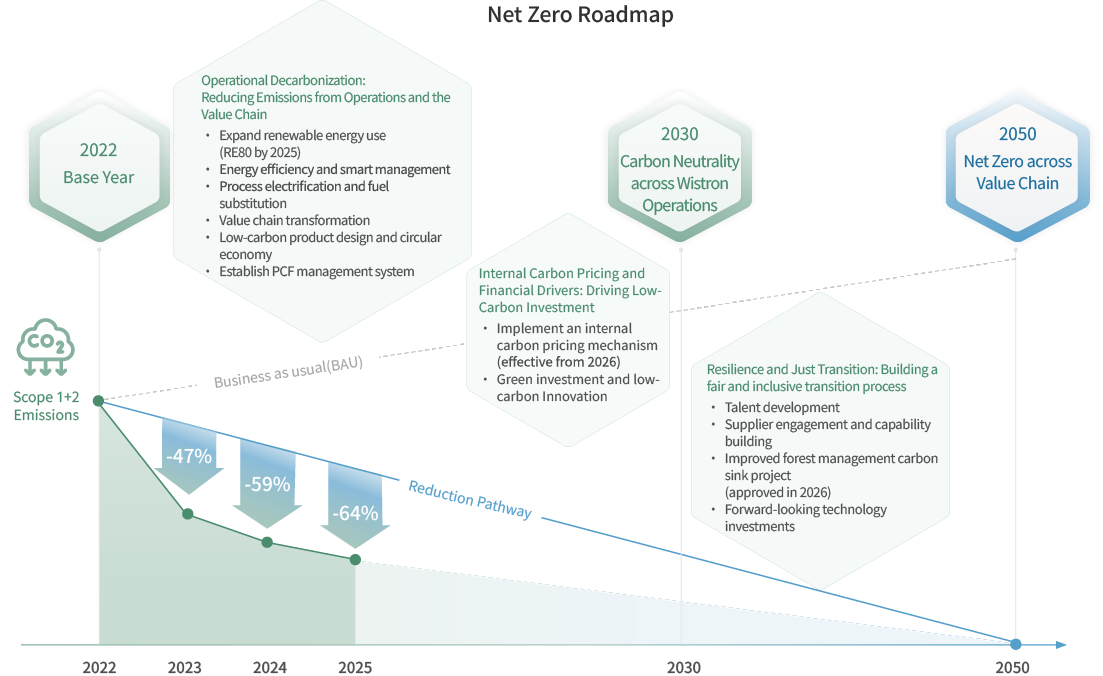
  • Scope 1 and 2 emissions decreased by  64%  (from base year of 2022), remaining on track toward the 2030 target of a 90% reduction and maintaining a downward trend.
  • Cumulative emissions reductions from the supplier carbon reduction program reached  57,820 tCO₂e , exceeding the 2025 annual target of 45,000 tCO₂e, with continued expansion of participation depth and coverage among high-impact suppliers.
  • Scope 3 Category 1 GHG emissions decreased by  17%  compared with the base year, demonstrating continued progress toward the Company's net-zero target.


Stakeholder Engagement Supporting the Climate Transition Plan


Wistron believes that achieving net-zero emissions requires collaboration across the value chain and broader society. We therefore continue to strengthen engagement and partnerships with value chain partners, customers, industry organizations, government, and civil society, recognizing stakeholders as essential partners in advancing our climate transition efforts. Through diverse engagement mechanisms, we seek to understand stakeholders’ perspectives and expectations regarding climate change and sustainable development, while jointly exploring low-carbon solutions that support the implementation and achievement of our transition plan.

Across the value chain, Wistron works closely with suppliers through sustainability management programs, capability-building initiatives, and decarbonization projects to enhance greenhouse gas management and emission reduction performance, thereby strengthening the climate resilience of the value chain. At the industry level, Wistron actively participates in sustainability organizations, industry platforms, and professional networks, sharing transition experiences and best practices with industry peers and partners to facilitate the wider adoption of low-carbon management approaches and sustainability practices. In the government and societal sphere, Wistron supports relevant policy directions and collaborates with public sector organizations, local communities, and other stakeholders to advance sustainable development and climate action, extending the positive impact of its transition efforts beyond its own operations.

 
How Stakeholders Support Wistron’s Transition Plan Engagement Methods Outcomes
Value Chain Partners
Through supplier capability building and decarbonization initiatives, Wistron supports suppliers in establishing GHG inventory, target management, and emissions reduction capabilities. These efforts help reduce value chain emissions and support Wistron's Scope 3 reduction pathway and net-zero transition goals.
  • Supplier sustainability assessments and audits
  • RBA audits and SAQ self-assessments
  • Supplier training programs
  • Supplier conferences, sustainability sharing sessions, and seminars
  • Supply chain decarbonization program
  • ISO 14064-1 and ISO 50001 implementation initiatives
  • Product Carbon Footprint (PCF) collaboration projects
  • 50 suppliers achieved ISO 14064-1 verification; 43 suppliers obtained ISO 50001 certification
  • 41 suppliers from designated energy-intensive sectors joined the SBTi initiative; 120 suppliers responded to the CDP questionnaire
  • Cumulative supply chain emissions reductions reached 57,820 tCO₂e
Customers
Wistron works with customers to advance green product innovation, increase the use of recycled materials, and improve product energy efficiency, helping reduce product life-cycle emissions and accelerate low-carbon transformation across the value chain.
  • Project collaboration meetings
  • ESG and product environmental performance discussions
  • Joint development of green products
  • Product carbon footprint and recycled material collaboration
  • Collaborated with customers to develop five low-carbon, energy-efficient modular component designs, including display panels, acoustics, keyboards, RF modules, and camera modules
  • Completed four system-level packaging projects (L5/L6) incorporating reuse mechanisms
Industry organization
Through participation in sustainability initiatives and industry platforms, Wistron engages with peers and experts on sustainability governance, net-zero transition, and corporate resilience. These exchanges strengthen organizational transition capabilities, facilitate the dissemination of sustainability best practices, and support industry-wide sustainable development.
  • Sustainability forums and industry exchange activities
  • Sustainability benchmarking and best practice sharing
  • Continued participation in industry organizations, including BCSD Taiwan and CommonWealth Sustainability Initiatives
  • Strengthened understanding of sustainability and net-zero transition trends through cross-industry engagement
  • Expanded sustainability knowledge-sharing and collaboration networks with industry peers
Governent
By aligning with international and local climate policy developments, Wistron continues to strengthen climate governance capabilities and ensure that its climate transition plan remains aligned with national and regional policy directions.
  • Compliance with net-zero policies and climate-related regulations
  • Alignment with climate governance frameworks
  • Sustainability assessments and public sustainability reporting
  • Wistron expanded the scope of its internal carbon pricing assessment to all global manufacturing and service sites in 2025
  • Formal implementation of the internal carbon pricing mechanism is scheduled to begin in 2026
Emloyees
Enhances employees' awareness and participation in net-zero transition, sustainability, and climate-related issues, while cultivating the knowledge, skills, and culture required to support the Company's transition journey.
  • ESG Sphere learning platform
  • Local revitalization and community engagement experiences
  • Wistron ESG board game workshops
  • Following the launch of the ESG Reward System, self-selected course completions increased by more than 17 times, significantly strengthening employee engagement in sustainability
Others
Through partnerships with enterprises and local revitalization organizations, Wistron promotes sustainable development initiatives, expands its positive social impact, and encourages broader societal participation in low-carbon and sustainability transitions.
  • Collaboration with the Taiwan Regional Revitalization Foundation
  • Held "Discovering New Strengths of Taiwan" Forum
  • Continued collaboration with the Taiwan Regional Revitalization Foundation;  Connected 60 companies and 93 corporate representatives through regional revitalization forums and engagement activities


2024 Sustainability Report Highlights ESG News Letter Follow us on FB Follow us on Instagram Follow us on Youtube Contact us