Waste Management
Wistron commits to eliminating the use of prohibited substances and raw materials while actively promoting waste reduction and circular resource utilization. Raw materials and suppliers are rigorously screened, and the Company continuously pursues technical advancements and eco-friendly material alternatives. Furthermore, Wistron strictly adheres to all environmental regulations and customer compliance requirements related to its activities, products, and services to attain or even exceed its established goals. Because Wistron does not directly dispose of waste on-site, its waste management strategy focuses primarily on "advancing waste classification and reduction" and "strengthening waste recycling and reuse." We comprehensively evaluate and check the generation and flow of waste and toxic substances through sound waste and hazardous substance management, minimizing waste as much as possible through recycling. Strong management over waste and hazardous substances can help reduce the impact and burden on the environment, but also enable Wistron to create niches in business operations with improved material usage and lowered operating costs, helping us achieve sustainability.
Wistron systematically identifies waste streams and reduction opportunities. This ensures that all waste undergoes proper recycling, recovery, and compliant subsequent treatment. This management approach significantly mitigates the environmental impact of operations and lowers operating costs by reducing waste treatment expenses, thereby building a sustainable competitive advantage for the Company.
Three Core Principles of Waste Management:
- Waste Source Review: Assess manufacturing processes and analyze waste generation points at each step of operation, confirming compliant waste disposal methodologies in strict accordance with regulatory requirements.
- Reuse, Recovery, and Recycling: Through review processes, Wistron identifies opportunities to reduce waste generation and explores pathways for material reuse, such as utilizing waste materials in other production processes or for the development of new products, thereby establishing a comprehensive recycling system.
- Monitoring & Assessment: Continue to track and collect data on waste generation and processing. The Company regularly evaluates the efficacy of waste reduction measures to uncover opportunities for improvement.
Investment in innovation or R&D to minimize waste
Product Design
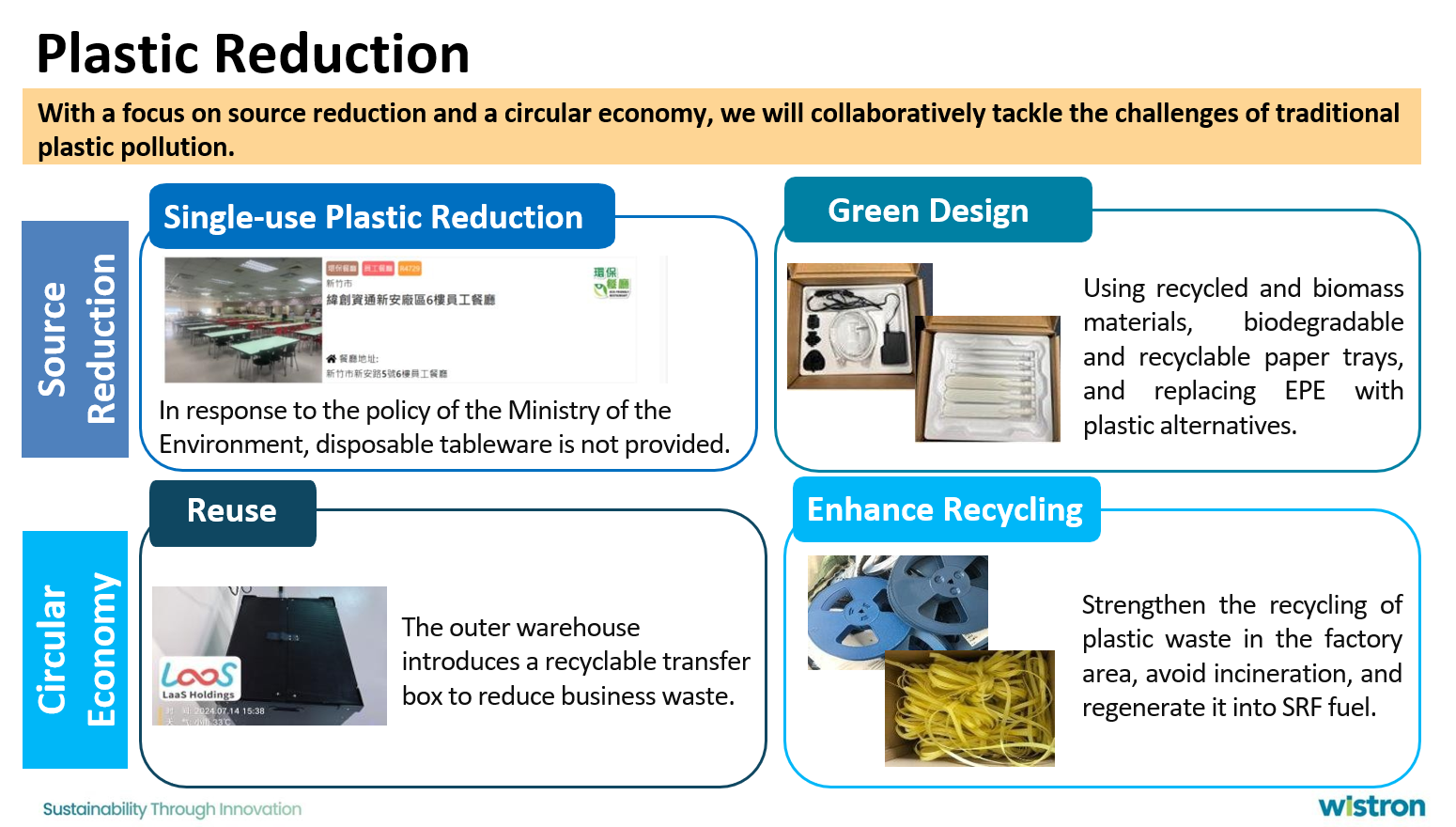
Wistron is dedicated to the research and development, design, manufacturing, and service of its products. Sustainable product design and development are based on the concept of the life cycle, considering aspects from raw material acquisition, manufacturing, distribution, product use, to waste recycling. This approach aims to reduce the environmental impact of products, create sustainable value, ensure the sustainable use of resources, and establish a green circular sustainable business model. During the product design and development phase, guidelines and review procedures for green product design are implemented, considering waste disposal and recycling from the design stage to minimize the impact on people and the environment after the product's disposal.
Product Manufacturing - End-of-Life Management
The ESG teams at Wistron's manufacturing locations are actively driving in-plant waste reduction and management through the following measures:
- Engage with waste treatment vendors and prioritize those with Zero Waste to Landfill accreditation to increase water recycling or reuse, thereby raising our recycling rate.
- Assess and adopt waste reduction technologies:
- Work with R&D personnel in plants to uncover source reduction opportunities, e.g., optimizing the use of sheet materials to reduce waste trimmings.
- Actively reach out to suppliers to adjust packaging specifications or methods to reduce packaging from raw materials.
Amount of Waste Generated
| Disposal Method |
2022 |
2023 |
2024 |
2025 |
| Non-hazardous |
a. Reuse |
232.67 |
491.15 |
346.00 |
392.31 |
| b. Recycle |
35,058.21 |
27,818.53 |
32,879.68 |
42,592.41 |
| c. Replaced with alternative raw materials |
- |
- |
- |
- |
| d. Landfill |
1,506.32 |
1,127.89 |
1,370.04 |
2,316.85 |
e. Incinerate
(with energy recovery) |
2,300.53 |
1,154.75 |
1,356.36 |
1,335.86 |
f. Incinerate
(without energy recovery) |
- |
32.00 |
45.97 |
148.94 |
| g. Other treatment |
- |
- |
873.45 |
1,212.17 |
| Subtotal |
39,097.73 |
30,624.32 |
36,871.51 |
47,998.54 |
| Hazardous |
h. Temporary storage |
- |
- |
- |
- |
| i. Transported to external treatment facilities_Recycle |
- |
669.17 |
948.92 |
934.56 |
| j. Transported to external treatment facilities_Other |
- |
275.04 |
255.98 |
316.51 |
| k. Transported to external treatment facilities - Incineration (w/ energy recovery) |
1,205.56 |
255.50 |
218.09 |
252.13 |
| l. Transported to external treatment facilities - Incineration (w/o energy recovery) |
- |
3.38 |
3.49 |
8.74 |
| Subtotal |
1,205.56 |
1,203.09 |
1,426.48 |
1,511.94 |
| Total |
Total waste generated (d.+e.+f.+g.+h.+j.+k.+l.) |
5,012.41 |
2,848.56 |
4,123.38 |
5,591.20 |
| Total waste recycled/ reused (a.+b.+c.+i.) |
35,290.88 |
28,978.85 |
34,174.61 |
43,919.28 |
Waste reduction
To accelerate pace toward waste reduction objectives, Wistron adopted 2018 as the baseline year and, beginning in 2021, established waste intensity as a management indicator, with a target of 2% reduction annual reduction. Specific targets include a 10% reduction by 2025, 20% reduction by 2030, and 30% reduction by 2035.
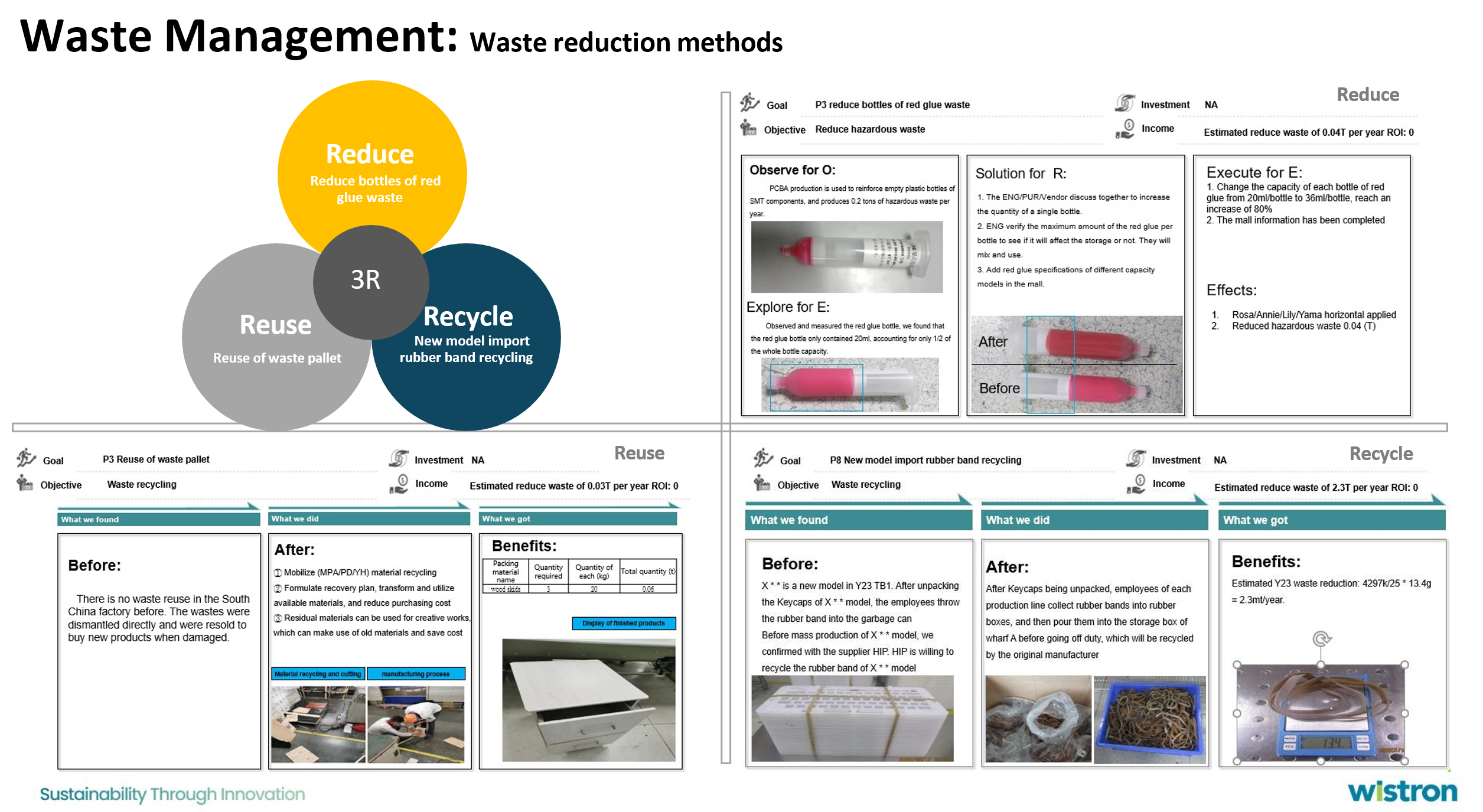
With our waste management processes, waste reduction and separation efforts are classified into three main focuses: reuse, recycle, and repurpose. These end-of-life treatment aim to increase waste conversion and reduce landfill rates:
- Reuse: Analyze opportunities for waste reuse and collaborate with suppliers to promote reuse of packaging materials. For example, reusing pallets, plastic boxes/packaging materials, or cardboard boxes in plants.
- Recycle: Engage with waste treatment vendors to increase waste recycling rates. For example, plastics, waste cardboards, kitchen waste, etc.
- Repurpose: Repurpose waste materials into other materials.
Through these three major actions, combined with regular environmental education and advocacy, and in conjunction with the UL2799 Zero Waste to Landfill certification planning and actions. In 2025, Wistron’s total volume of recycled, reduced, and reused waste reached 1,432.73 metric tons of waste, reducing waste intensity by 11% from 2018 levels and exceeding our target of 10%.
International Certification Promotion - Zero Waste to Landfill
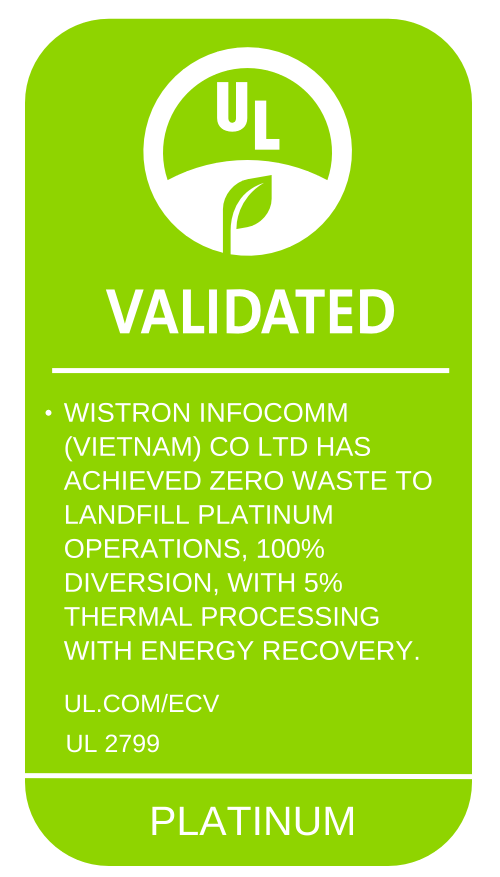
Wistron has introduced the UL 2799 waste zero landfill certification mechanism in all major manufacturing plants since 2022. Our widespread adoption of UL 2799 aims to identify waste reduction plans and optimize resource utilization to achieve a sustainable resource cycle. In 2025, Wistron obtained five Platinum-level Zero Waste to Landfill certifications. The certified sites included the Hsinchu, Zhongshan, Chengdu, Chongqing, and Vietnam sites, all of which achieved a 100% diversion rate. Wistron continues to advance its zero-waste objectives and expand successful practices across its overseas operations, further reinforcing its commitment to sustainable business practices.
Waste Recycling Rate
| Item |
2022 |
2023 |
2024 |
2025 |
| Non-hazardous |
Reuse |
0.6 |
1.5 |
0.9 |
0.8 |
| Recycle |
87.0 |
87.4 |
85.9 |
86.0 |
| Replaced with alternative raw materials |
0.0 |
0.0 |
0.0 |
0.0 |
| Incinerate (with energy recovery) |
5.7 |
3.6 |
3.5 |
2.7 |
| Hazardous |
Recycle |
- |
2.1 |
2.5 |
1.9 |
| Total |
93.3 |
94.7 |
92.8 |
91.4 |
Waste Management Performance indicators
| Performance Indicators |
Unit |
2022 |
2023 |
2024 |
2025 |
| Waste per unit-revenue |
kilotons of waste output/
NT$ 1B |
0.059 |
0.048 |
0.056 |
0.040 |
| Non-hazardous waste output per unit-revenue |
kilotons of waste output/
NT$ 1B |
0.057 |
0.046 |
0.054 |
0.039 |
| Hazardous waste output per unit-revenue |
kilotons of waste output/
NT$ 1B |
0.002 |
0.002 |
0.002 |
0.001 |
- Notes 1: Given the report's disclosure boundaries, waste intensity in 2018 has been adjusted to 0.062 kilotons / NT$1B.
- Notes 2: 2025 performance indicators are based on waste generation/Wistron Group revenue from Wistron and subsidiaries listed in consolidated financial statements (excl. Wiwynn and its subsidiaries)
- Notes 3: Figures for other years were tallied according to the disclosure boundaries from respective sustainability reports