Supply Chain Sustainability Management
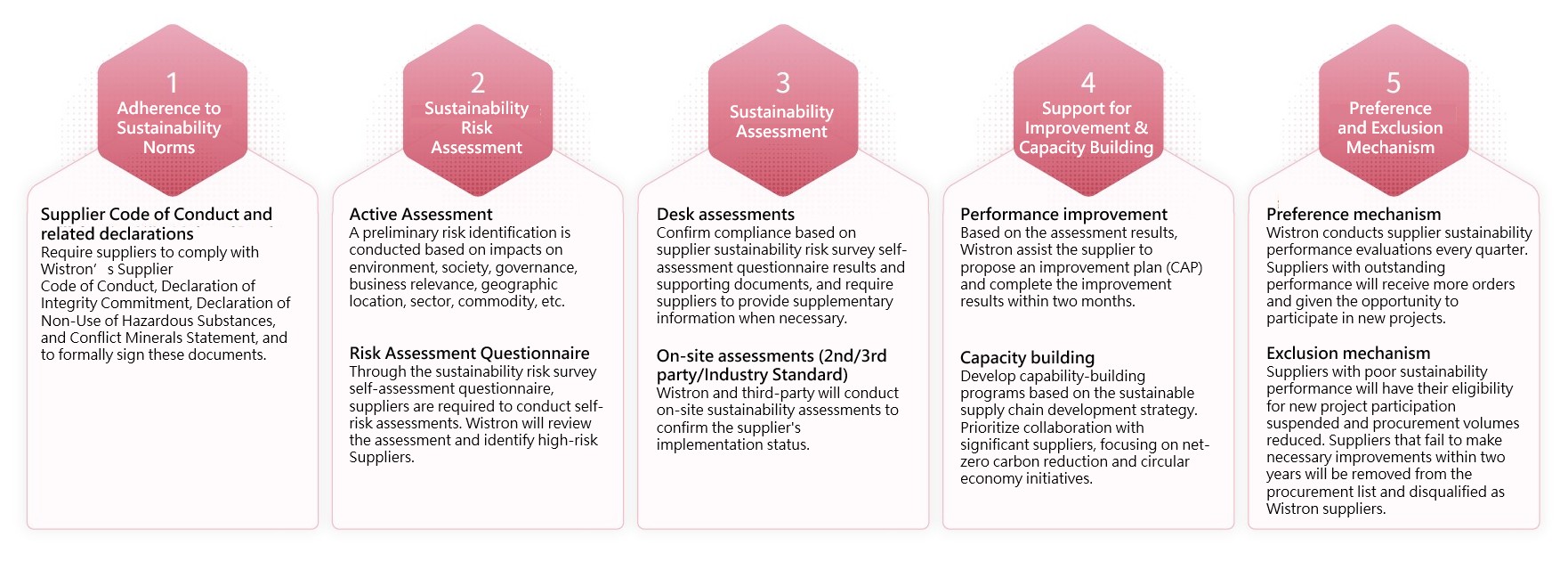
Wistron has established a comprehensive sustainable supply chain management process that consists of five core steps: adherence to sustainability norms, sustainability risk assessments, sustainability assessment, corrective actions and capability building, and the implementation of reward and exclusion mechanisms. This mechanism is designed to ensure that every supplier complies with Wistron’s Code of Conduct and sustainability requirements, while effectively mitigating potential ESG-related risks. Through regular and comprehensive risk assessments and audits, Wistron not only monitors suppliers’ implementation but also provides professional guidance to help suppliers develop and execute targeted improvement action plans. In addition, through long-term collaboration and capability-building initiatives, Wistron supports suppliers in continuously enhancing their performance across environmental, social, and governance (ESG) dimensions. These efforts not only improve the overall sustainability performance of suppliers, but also strengthen Wistron’s leadership and influence within the global supply chain, ensuring the steady advancement of the entire value chain toward sustainability.
Compliance with Sustainability Standards
Supplier code of conduct
In advancing corporate sustainability, Wistron recognizes the critical impact of supply chain management on both society and the environment. To this end, Wistron has established a Supplier Code of Conduct as a foundation for supplier action in sustainability practices. This Code is aligned with the Responsible Business Alliance (RBA) Code of Conduct and the United Nations Guiding Principles on Business and Human Rights, covering five core areas: labor rights, health and safety, environmental protection, ethics, and management systems. The Code also includes specific requirements related to biodiversity, the prevention of deforestation, and land conservation, aiming to holistically enhance the sustainability of the supply chain. Wistron also incorporates the level of supplier compliance with the Code as a key evaluation criterion in procurement decisions to ensure alignment between supply chain partners and the Company’s sustainability goals.
In 2025, 100% of Wistron’s Tier-1 suppliers signed the Supplier Code of Conduct, demonstrating their full recognition of and commitment to Wistron’s sustainability standards. In addition, depending on the supplier category, Wistron further required the signing of the letter of agreement, the declaration of controlled hazardous substances confirmation and compliance, and the declaration of non-use of conflict minerals, all of which also achieved a 100% signing rate. These measures have not only strengthened Wistron’s governance capabilities within the supply chain but also promoted a shared commitment among partners to uphold higher standards of social and environmental responsibility.
Signing of the Supplier Code of Conduct
| Year |
2025 Performance |
2025 Targets |
| Tier-1 suppliers |
Number of suppliers required to sign |
421 |
- |
| Percentage of signed suppliers(%) |
100 |
100 |
| New suppliers |
Number of suppliers required to sign |
43 |
- |
| Percentage of signed suppliers(%) |
100 |
100 |
Supplier Integrity Management
Wistron is committed to building a responsible supply chain of the highest standards. Through its Supplier Code of Conduct, the Company establishes clear behavioral norms and standards for its partners. All suppliers are required to complete training courses on Wistron’s anti-corruption policies, with a 100% completion rate. In addition, Wistron reinforces its commitment to ethical business practices and integrity during the annual supplier conference. The Company also maintains dedicated whistleblowing and grievance channels exclusively for suppliers, which are managed primarily by the Global Supply Chain Management unit. In 2025, there were no supplier-reported cases, and no contracts were terminated due to misconduct or corruption.
Wistron supplier code of conduct
Sustainability Risk Assessment
In order to assess sustainability risks within the supply chain, Wistron conducts a two-phase risk investigation on suppliers. Through varying requirements at different stages, we aim to evaluate suppliers’ ESG performance and identify potential risks within the supply base. The first phase focuses on comprehensive risk screening, while the second phase further identifies high-risk suppliers. For high-risk suppliers identified through the assessment process, Wistron initiates an assessment procedure, combining professional guidance with support to help suppliers develop and implement improvement plans. This approach enables effective control at the source of risk and helps reduce overall sustainability risks within the supply chain.
Active Assessment Target: All suppliers
To identify potential risks within the supply chain, Wistron conducts preliminary assessments and screening of suppliers. The evaluation covers multiple dimensions, including environmental, social, and governance (ESG) performance, business relevance, country or region of operation, industry type, and commodity characteristics. Through this process, suppliers with potential risks are preliminarily identified and brought under management to reduce overall supply chain risk.
Risk Assessment Scope : Tier 1 and Non-Tier 1 Suppliers
To comprehensively understand the sustainability risks of existing suppliers, Wistron distributes a Sustainability Risk Self-Assessment Questionnaire to both Tier 1 and non-Tier 1 suppliers, requiring them to provide supporting documentation to gain deeper insights into their sustainability risks and management practices. The questionnaire covers five key sustainability dimensions: sustainability and operation risk management, supply chain and continuity operation, environmental protection, human rights and labor protection, and occupational safety and health. Through this mechanism, Wistron is able to identify and manage sustainability risks across the supply chain and mitigate potential risks.
Suppliers with a score of less than 80 are defined as high-risk suppliers. In 2025, a total of 12 high-risk suppliers were identified. According to the results, the main sustainability risk factors in 2025 were concentrated in the areas of environmental protection and sustainability and operation risk management. In order to effectively mitigate the impact of these risk factors, Wistron will prioritize greenhouse gas inventory and certifications (ISO 50001 and ISO 14064-1) for critical and high-energy-consuming material suppliers. Other identified risk factors will be listed as items requiring guidance for remediation through assessment and improvement programs.
Sustainability Assessment
To comprehensively assess the implementation of sustainability practices among suppliers, Wistron adopts a diversified assessment approach, including both desk assessments and on-site assessments. On-site assessments are further categorized into 2nd party assessments, 3rd party assessments, and assessments conducted in accordance with industry standards. Wistron has also established annual targets and a long-term goal for 2030, providing clear direction for promoting sustainability in the supply chain over both the short and long term, thereby enabling continuous progress toward these objectives.
Corrective action/improvement plans
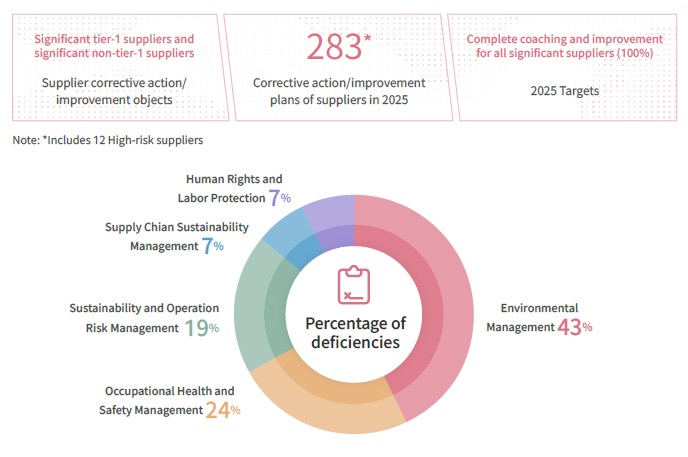
To enhance the sustainability performance of suppliers, Wistron provides counseling measures for deficiencies identified in assessments, including on-site and remote support to assist suppliers in developing and implementing improvement plans. If the supplier is unable to complete the improvements within two months, they may submit another assessment application for a second assessment to confirm the implementation of the improvement plan. However, if a supplier fails to pass the second assessment, they must wait six months before reapplying. During this period, Wistron will evaluate the feasibility of using alternative materials or consider replacing the supplier. If immediate substitution is not feasible due to urgent supply requirements, the replacement will proceed once an alternative is in place. For suppliers unable to meet improvement requirements within two years, Wistron will gradually reduce procurement volume until the partnership is terminated or the supplier is disqualified. In 2025, all assessed suppliers completed the required improvements within the specified timeframe, and no partnerships were terminated due to non-compliance.
Supplier assessment corrective/improvement actions
Driving Supplier Excellence with Sustainability Performance
To encourage suppliers to implement sustainable practices and enhance their sustainability performance, Wistron conducts sustainability performance evaluations of suppliers and implements a preference and exclusion mechanism in accordance with relevant management procedures.
| Preference mechanism |
Exclusion mechanism |
| Suppliers with outstanding sustainability performance ratings receive higher order allocations, and are granted opportunities to participate in new projects. They are also recognized and honored as Outstanding Suppliers during the annual Partner Conference. |
Suppliers with poor sustainability performance will have their eligibility for new project participation suspended and procurement volumes reduced. Suppliers that fail to make necessary improvements within two years will be removed from the procurement list and disqualified as Wistron suppliers. |
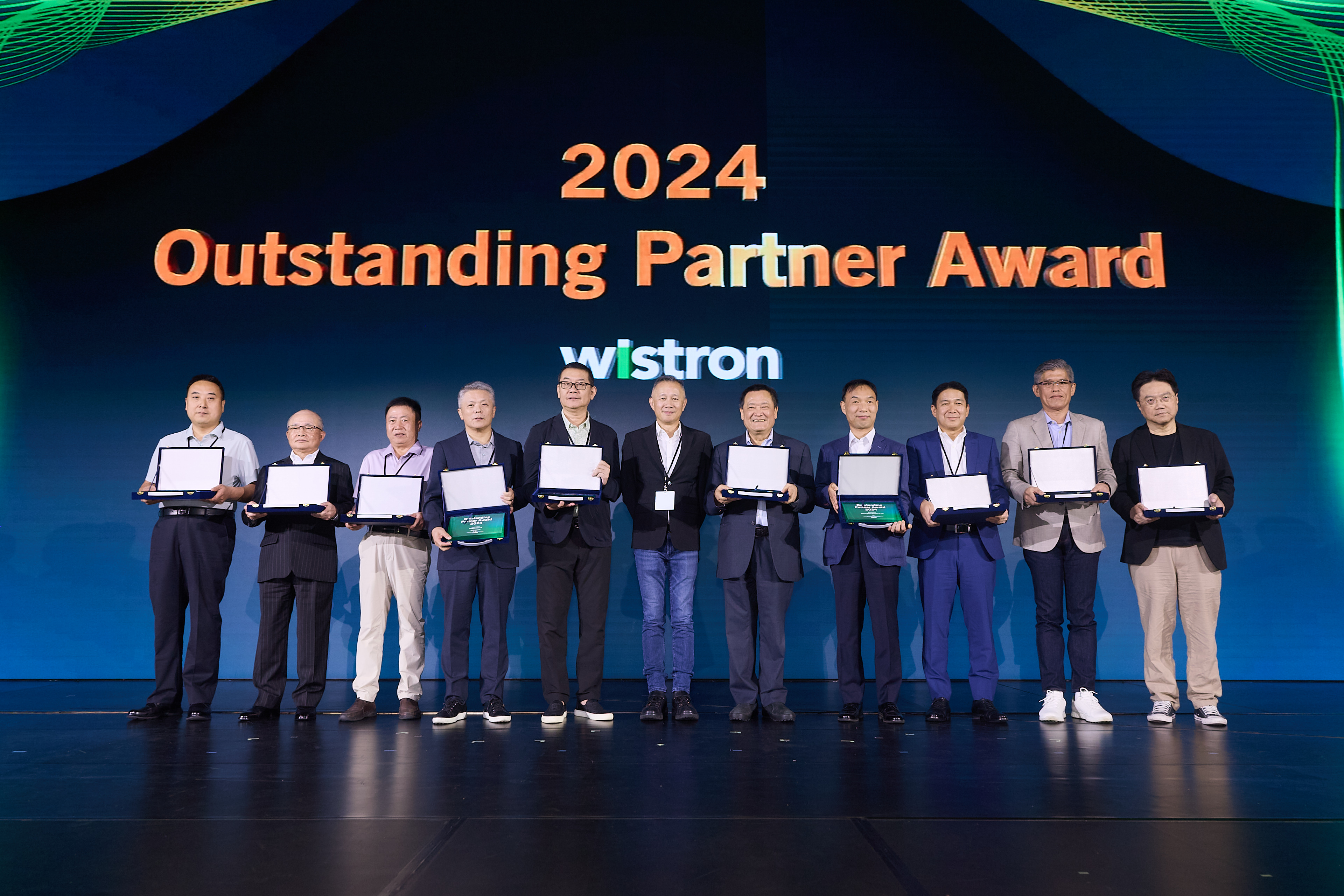
| 2025: 10 suppliers received an Outstanding Supplier Award and 8 suppliers received more Wistron orders for outstanding sustainability performance. |
2025: One supplier was placed on the exclusion list due to poor sustainability performance after recurring non-conformities were identified following an RBA audit and implementation of a CAP. |
Supplier Sustainability Evaluation
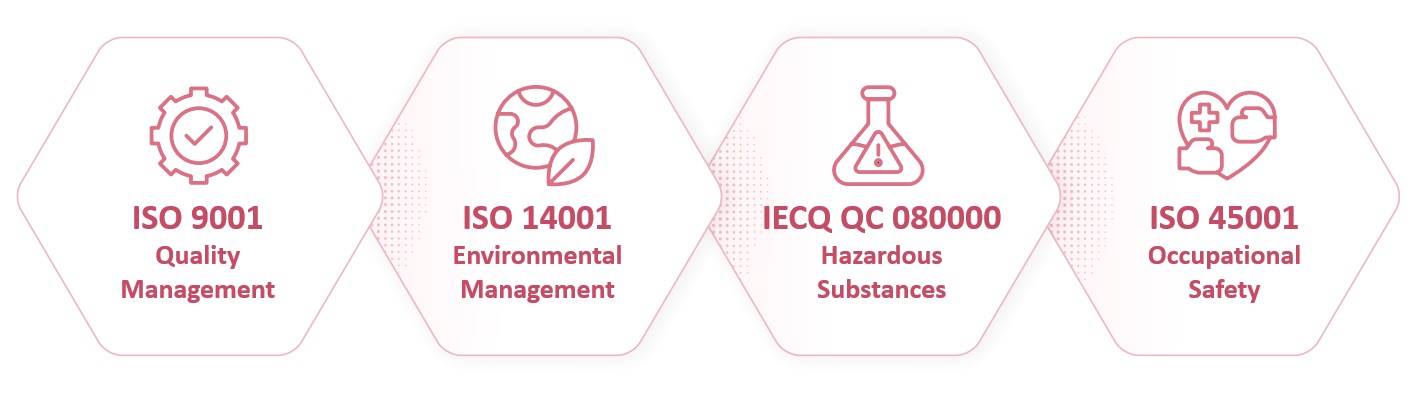
Wistron has set ESG evaluation thresholds for new and existing suppliers. Those applying to be Wistron suppliers are required to sign a Code of Conduct and pass the following four certifications:
| Scope |
Assessment Tool |
ESG Weighting |
ESG Assessment Criteria |
| Sustainability and operation risk management |
Business Continuity Management /
Sustainability Disclosure |
13.33% |
- Responsible Business Alliance (RBA) Code of Conduct, labor standards, health and safety, environmental standards, business ethics, and management systems
|
| Existing suppliers |
Supplier performance evaluation
including quality, technology, cooperation, delivery capability, price, and ESG performance |
20% |
- Quarterly review of ESG sustainability activity, ISO 14064-1 certification annual review, ISO 50001 certification annual review, annual ESG sustainability audit score, and major missing events of ESG sustainability on-site assessment
|
ESG Risk Management and Mitigation Plans
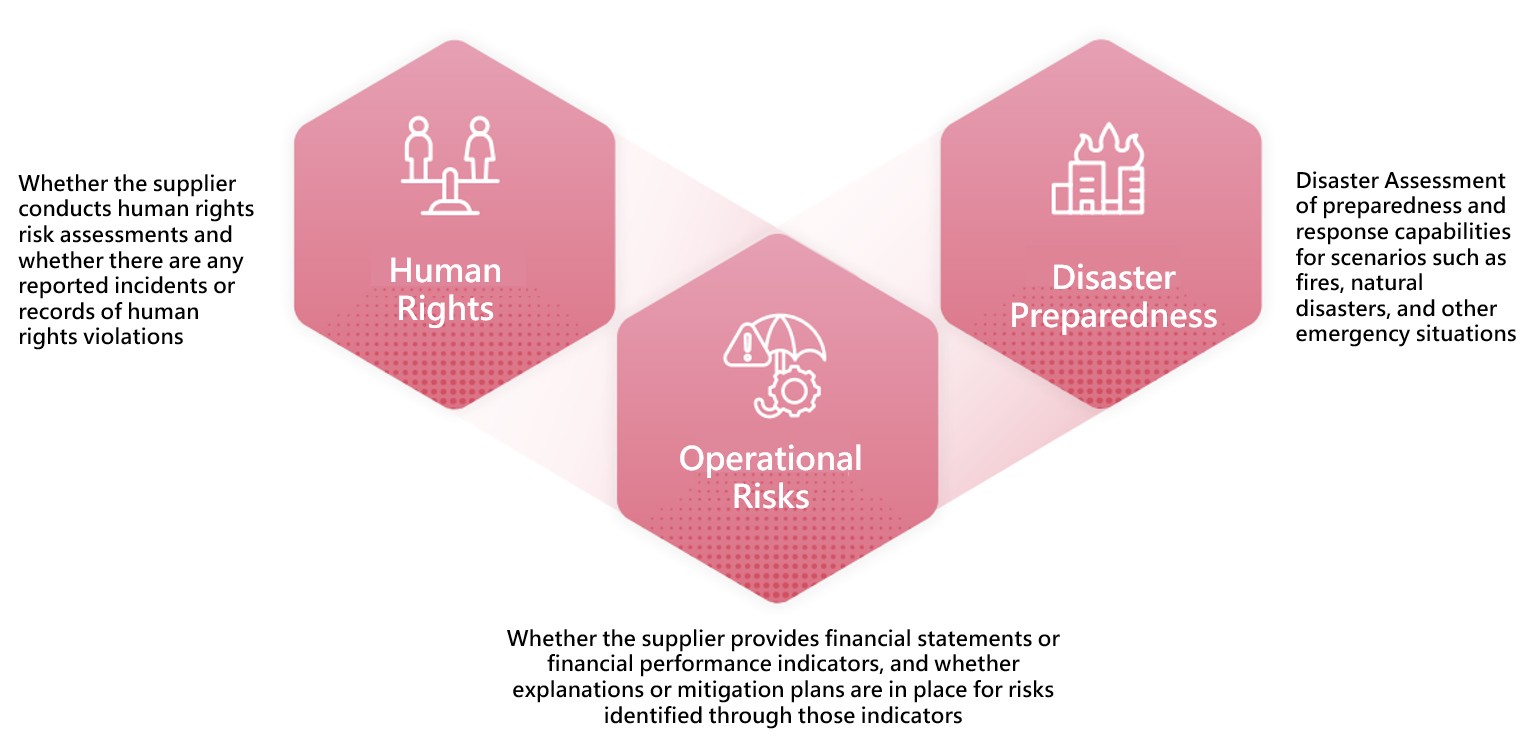
In addition to the existing supplier performance evaluation framework, Wistron incorporates ESG risk management and mitigation plans into supplier assessments, covering three key risk areas:
Capacity Building
Buyer Education Training
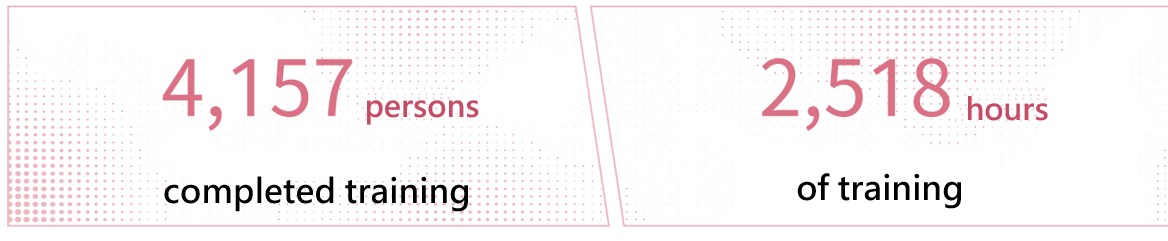
To ensure procurement staff (including personnel from buyers, logistics, quality assurance, and other supply chain-related departments) fully understand supplier management and sustainability processes, as well as their roles, Wistron implements systematic training to enhance employees’ expertise in ESG topics. The training covers fundamental human rights issues such as the prohibition of forced labor (including servitude, debt bondage, and human trafficking) and gradually strengthens professional capabilities needed for sustainability management for Wistron’s business scope. Through this training, employees are equipped to drive sustainable supply chain strategies and ensure effective implementation in daily operations and interactions with suppliers. In 2025, Wistron continued to collaborate with the ESG Sphere Course Review Committee to develop a series of ESG-related training modules. A total of 4,157 employees completed the training, amounting to 2,518 hours of learning.
Supplier Education Training
To support suppliers in adopting ESG-aligned strategies and actions in their operations—and to strengthen the overall resilience and sustainability of the supply chain—Wistron continues to offer relevant training through its online supplier education platform. These courses aim to enhance suppliers’ awareness of sustainable development principles and reinforce partnerships with suppliers. In 2025, in addition to the annual mandatory course on the Supplier Code of Conduct, Wistron added two new mandatory courses—RBA Standards on Prohibition of Forced Labor and ISO 37001 Anti-Bribery Management Systems. The former supports suppliers in understanding the importance of RBA human rights issues, while the latter ensure suppliers recognize the key role of ethical management in earning customer trust and advancing sustainability competitiveness. A total of 421 tier 1 suppliers completed online training, representing a 100% training completion rate.
| Existing |
New |
-Annual Course on Supplier Code of Conduct
Covers Wistron’s core requirements |
-ISO 37001 Anti-Bribery Management Systems
Covers the importance of ethical management in advancing sustainability competitiveness
-RBA Standards on Prohibition of Forced Labor
Helps suppliers recognize the importance of RBA human rights issues |
Partner Conference / Sustainability Sharing Forum/Lectures
2025, Wistron focused on the theme of “Make an Impact,” hosting its annual Partner Conference, ESG sharing sessions, sustainability lectures, and various events to strengthen supplier awareness over sustainability and resilience, enhance ESG capabilities, and deepen sustainability partnerships across the supply chain.
| Events |
Scale |
Description |
| ESG Sustainability Sharing Forums |
302 supplier participants |
Focused on carbon reduction targets and performance tracking, EPEAT and PFAS management strategies, ISO 37001 anti-bribery, ISO 20400 sustainable procurement, zero-waste-to-landfill initiatives. Case sharing included measurement and verification case studies of energy savings and carbon reduction from lighting and HVAC system upgrades from three benchmark suppliers. Promoted Wistron’s sustainability management, anti-corruption policies, greenhouse gas inventory, and water risk management. Also highlighted industry cases of significant losses from bribery and corruption to raise awareness among suppliers. |
| Supplier Sustainability Evaluation Lecture |
94 participants from 48 suppliers |
Held on August 26 and September 2 at Zhongshan and Chongqing sites, respectively. Covered ESG policies, sustainable procurement requirements, and performance evaluation criteria. Conducted training on prohibition of forced labor. Included interactive ESG board game Wi-Thrive to enhance engagement and deepen understanding of sustainability topics. |
Establishing a segmented supplier carbon management promotion strategy
Starting from 2021, annual greenhouse gas inventory results from suppliers are collected. Upon analysis, it was found that suppliers exhibit varying degrees of capability in carbon inventory and reduction. Consequently, a classification management system has been implemented, categorizing suppliers based on their level of significance (determined by factors such as revenue and material substitutability) and carbon inventory capabilities. Tailored project plans are provided to suppliers in different categories, along with necessary assistance resources, experience-sharing courses, and consulting resources, to ensure their progressive advancement towards carbon neutrality. In 2025, suppliers were encouraged to adopt renewable energy, particularly solar power, optimize manufacturing processes, and improve energy efficiency through facility and equipment upgrades, thereby reducing carbon emissions.
.JPG)
Building supplier carbon management sustainability capabilities
Wistron conducted a comprehensive inventory of Scope 3 greenhouse gas emissions, with results indicating that upstream raw material procurement accounts for the highest share of emissions. In response, Wistron launched a carbon management capacity-building program tailored to different categories of suppliers. The program covers carbon inventory training, verification mechanism enhancement, the introduction of Science Based Targets (SBTi) initiative emission reduction targets, and collaborative carbon reduction projects. In 2025, Wistron initiated four carbon management projects and engaged in in-depth collaborations—lasting over six months—with 352 suppliers (including 227 significant suppliers), continuously enhancing the carbon management capabilities of supply chain partners and jointly advancing emission reduction targets.
Supplier Circular Economy Project Cooperation
Amidst the global push for a circular economy, Wistron remains committed to safeguarding natural life and forests by fostering communication and collaboration with suppliers. This focus enables the fulfillment of biodiversity and non-deforestation pledges, while also encouraging suppliers to obtain Zero Waste to Landfill certification, and simultaneously reducing the Earth’s environmental burden. Furthermore, it enhances suppliers’ sustainability awareness and capabilities to adapt to evolving sustainability trends.
Supplier capability building KPI
- Supplier audits and support: 283 significant suppliers were audited and 100% of them implemented corrective actions within the designated time for any deficiencies found;
- Supplier training: 100% of the 232 significant tier 1 suppliers completed mandatory online courses (Supplier Code of Conduct, RBA Standards on Prohibition of Forced Labor, and ISO 37001 Anti-Bribery Management);
- Supplier capacity building in carbon management and circular economy projects: Promoted carbon management to 227 significant suppliers and circular economy to 20 suppliers through six months of in-depth collaboration, with a capacity building success rate of 81.98%;
Wistron provided support to significant suppliers for the implementation of corrective action against deficiencies found in audits as well as education and training for capacity building with carbon management and circular economy projects, with a 100% coverage rate.
Green Supply Chain Management
A green, transparent, and circular supply chain encompasses all the essential elements of a modern sustainable supply chain. Wistron’s green supply chain management covers the following:
- Green Design: Incorporates RoHS standards (Restriction of Hazardous Substances) at the design stage to ensure environmental compliance. Wistron products comply 100% with RoHS and REACH regulations across all countries and 100% of suppliers have signed supplier hazardous substance declarations.
- Green Procurement: In accordance with green design requirements, priority is given to procuring green materials, including products and suppliers with green label and energy-efficiency certifications, to reduce environmental impacts.
- Green Manufacturing: Partners with low-carbon suppliers to implement carbon reduction strategies and promote sustainable production. In 2025, 21 suppliers participated in carbon reduction projects, with 20 suppliers achieving Zero Waste to Landfill certification.
- Green Packaging: Reduces and reuses packaging materials while ensuring reliability. Prioritize suppliers with Forest Management (FM) and Chain of Custody (CoC) certifications for shipping materials to ensure sustainable sourcing. 100% of Wistron’s key packaging suppliers are FSC-certified.
- Green Transportation: Utilizes low-emission, energy-efficient, and smart logistics solutions to support carbon reduction. In 2025, the Vietnam site reduced truck trips by 6,164, reducing trips by 1.29 million kilometers and approximately 76% of emissions.
- Green Recycling: Promotes the use of sustainable materials. Low-carbon notebooks contain 40.2% PCR material, and 96% of packaging materials are recyclable or reusable; while server products utilize 90% recycled steel (SGCC).
These measures ensure that every stage of the green supply chain helps mitigate environmental impacts and supports the company’s progress toward sustainable development goals.