
South China
Wistron Zhongshan’s Highly Automated Production Line Powers Sustainable Manufacturing
SDGs
Advancing SDG 9 Through Smart Manufacturing: A Benchmark Production Line for Both Efficiency and Value Creation
As the manufacturing industry moves toward higher-value production and sustainable transformation, leveraging technological innovation to simultaneously enhance efficiency, quality, and workforce value has become a critical priority for enterprises. In response to the United Nations Sustainable Development Goal SDG 9 (Industry, Innovation and Infrastructure), Wistron has fully deployed advanced automation technologies across the FA9 production line at its Zhongshan Plant 3. From assembly and testing to inspection processes, the company is building a smart manufacturing demonstration line that strengthens operational competitiveness while supporting sustainable development.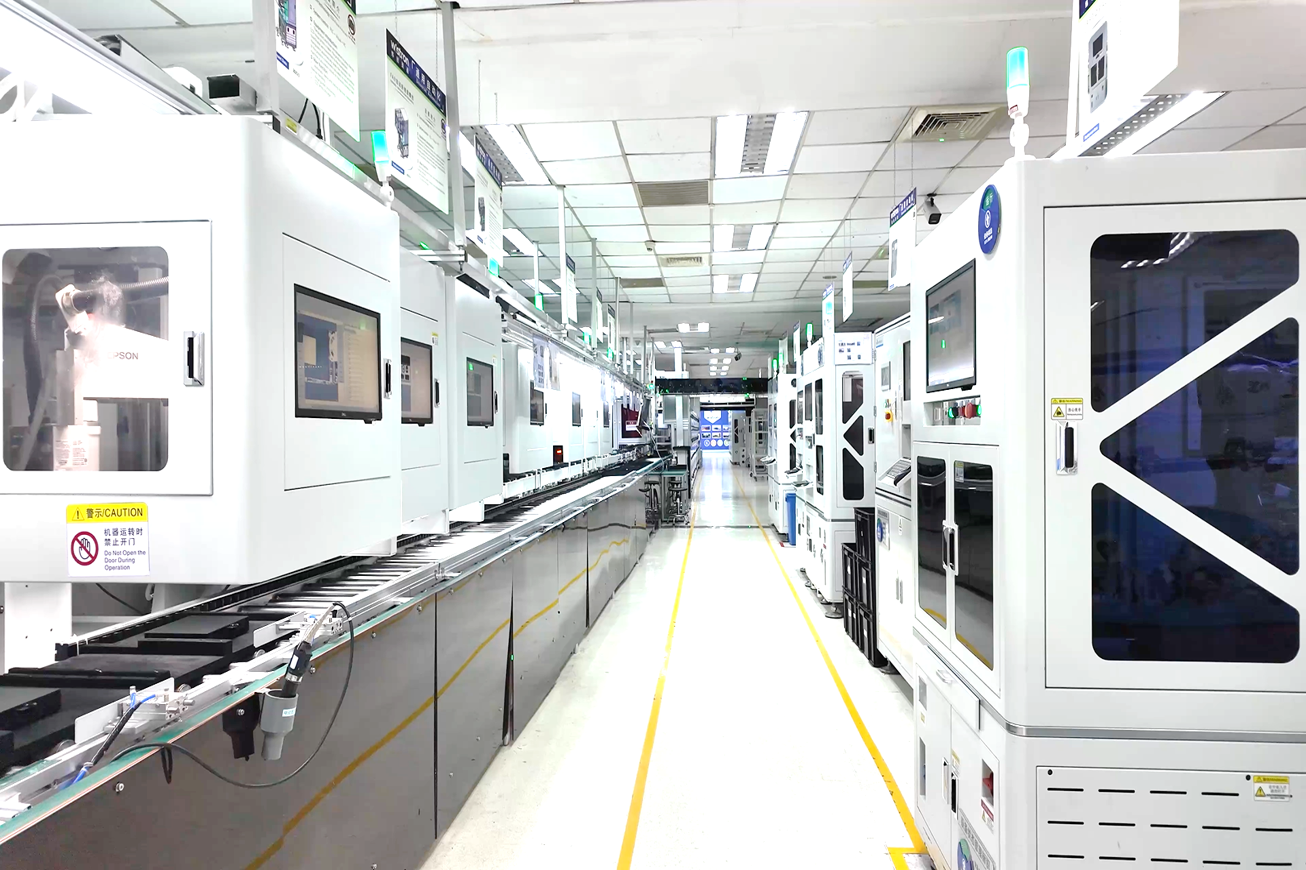
Strong Organizational Commitment Maximizes Resource Synergy
Behind the FA9 automation upgrade lies a unified organizational commitment and seamless cross-functional collaboration. Since 2024, the automation rate of the FA9 production line has steadily increased from 80% and surpassed 90% in 2025. This advancement has not only reduced risks associated with manual operations but has also minimized rework and material waste. By improving economic performance while lowering environmental impact, Wistron has established an operating model that balances efficiency with responsibility.An Evolution from Targeted Improvements to Full-Line Transformation
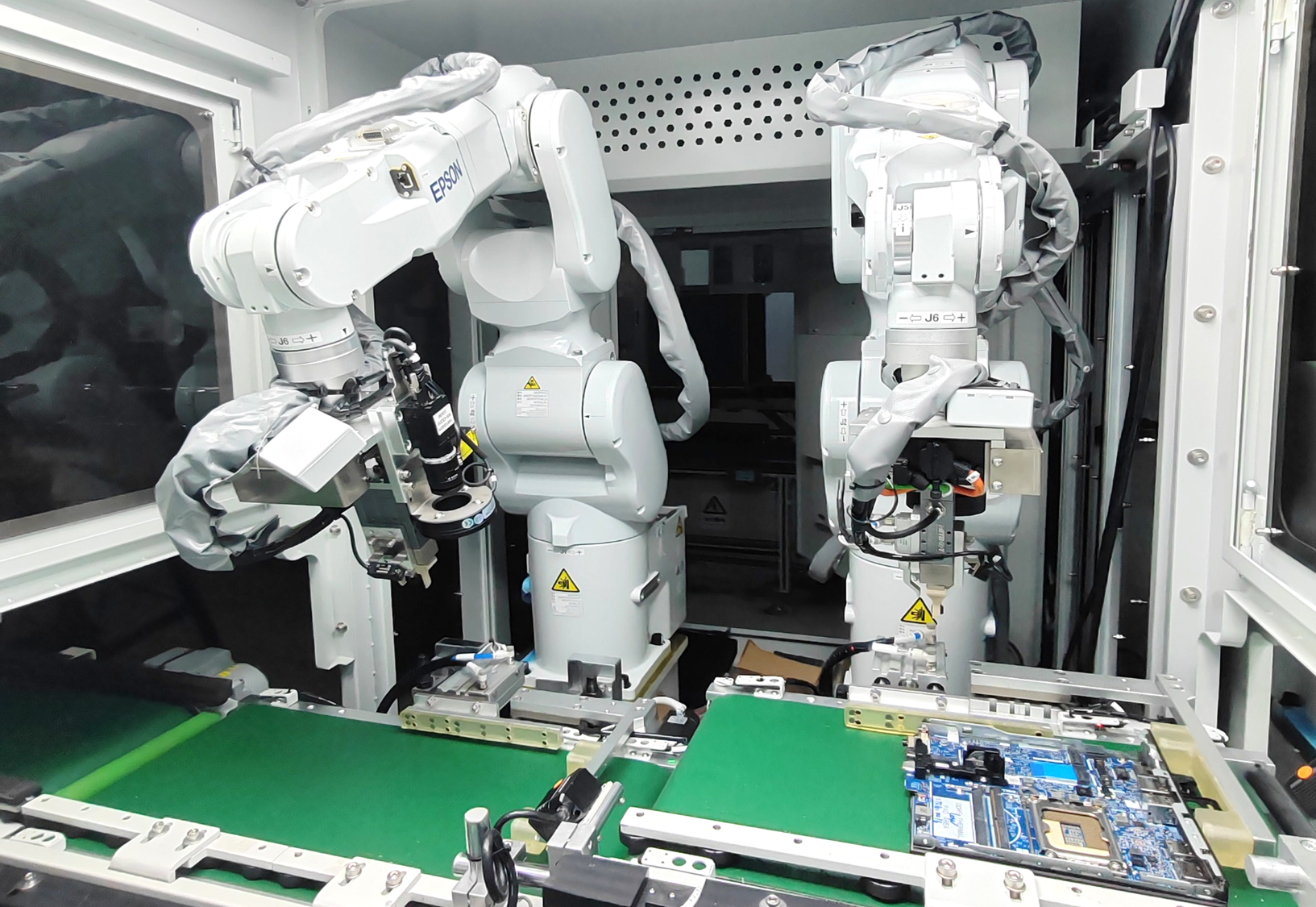
The transformation of FA9 did not happen overnight. Beginning in 2022, the team pursued a phased approach to optimize critical manufacturing processes. Automation initiatives included functional testing, motherboard screw fastening, thermal pad placement, labeling, and automatic barcode scanning. Throughout this journey, the team successfully overcame challenges related to equipment compatibility and production-line integration, laying a solid foundation for comprehensive automation.In 2025, FA9 introduced more than ten automation solutions simultaneously, including automated material loading, automatic side-cover screw assembly and removal, WLAN and DIMM insertion/extraction, and Automated Optical Inspection (AOI) for internal component verification. At the same time, the entire production line was reconfigured to maximize efficiency. Through close collaboration among production, engineering, quality, and operations teams, modular testing platforms and rail-guided robotic systems were implemented, enabling one-click line changeovers and mixed-model production. This successfully integrated the three major manufacturing stages—assembly, testing, and packaging—creating a more flexible and efficient production environment.
Quantifying Smart Manufacturing Value Through Data-Driven Results
The implementation of advanced automation has delivered measurable and verifiable outcomes. The automation rate of the FA9 production line increased from 80% in 2024 to 91.4%, while workforce allocation was optimized, resulting in a reduction of 16 positions and annual cost savings of approximately RMB 1.698 million. Through intelligent production-line design, employees have been freed from repetitive and high-risk tasks, enabling them to focus on higher-value engineering and quality management activities.Scaling Smart Manufacturing to Amplify Sustainable Impact
Looking ahead, the FA9 team will continue expanding its automation capabilities by introducing additional technologies, including automated fixture loading and unloading systems and automated motherboard assembly equipment, further enhancing overall production-line integration and performance.At the same time, Wistron plans to launch a technology replication and deployment program, extending the modular design principles and data-driven operational expertise developed on FA9 to other production lines. This initiative will broaden the impact of smart manufacturing across the organization.
Through the continuous adoption of intelligent technologies, digitalized operations, and energy-efficiency optimization, Wistron is strengthening its operational resilience and competitive advantage while creating a practical pathway toward sustainable manufacturing. The highly automated production line represents not only a technological achievement but also Wistron’s commitment to driving sustainability through innovation and putting corporate responsibility into action.