Wistron Surpasses 80% Renewable Electricity Usage
2026.05.05
News
Wistron Corporation continues to strengthen its climate governance, with the renewable electricity usage rate across its global operations officially exceeding 80% in 2025. This milestone not only demonstrates tangible progress toward Wistron’s target of 100% renewable electricity by 2030 but also underscores the Company’s long-term commitment to the energy transition and climate action.
From Foundation-Building to Global Deployment: A Phased Strategy to Drive Transformational Momentum
Wistron noted that achieving an 80% renewable electricity usage rate in 2025 reflects the cumulative results of years of structured transformation. Since reshaping its sustainability strategy in 2022, Wistron has identified low-carbon manufacturing as a core strategic pillar and has progressively established a comprehensive decarbonization governance framework. The Company has adopted a phased, step-by-step approach, driven from within and expanded outward, encompassing:
- Carbon management: Implementing greenhouse gas inventories and data transparency mechanisms to establish a robust foundation for decarbonization. Wistron has also independently developed a Decarbonization Management Platform, integrating visualized management features with AI-based analytics to dynamically track progress in emissions reduction and identify potential performance gaps.
- Carbon reduction: Substantially reducing operational emissions through improved energy efficiency, energy-saving technology upgrades, and the accelerated deployment of renewable energy.
- Net-zero advancement: Expanding decarbonization efforts across sites and regions and extending collaboration with the supply chain to systematically drive emissions reductions across the value chain.
In parallel, Wistron follows the Science-based Targets Initiative (SBTi) pathway and completed target validation in 2024, confirming alignment with the Paris Agreement’s 1.5°C trajectory. This milestone further extends Wistron’s decarbonization efforts beyond internal operations to its broader value chain.
A Clear Roadmap Toward Carbon Neutrality and Net-Zero Emissions
Using 2022 as the base year, Wistron is committed to achieving carbon neutrality in its operations by 2030 and net-zero emissions across its value chain by 2050. To support these commitments, the Company systematically reduces greenhouse gas emissions across Scope 1, 1,2, and 3 through measures such as increasing renewable energy adoption, improving energy efficiency, developing low-carbon products, and implementing an internal carbon pricing (ICP) mechanism.
Among these initiatives, deploying renewable energy is a key driver of Scope 2 emissions reductions, working in synergy with other decarbonization measures to accelerate the overall transformation.
A Diversified Renewable Energy Portfolio Balancing Emissions Reduction and Supply Resilience
In advancing its energy transition, Wistron adheres to the principle of “on-site generation as a priority, supplemented by power purchase agreements (PPAs) and renewable energy certificates (RECs).” This approach ensures substantial progress in the transformation of the energy structure while maintaining energy autonomy and long-term resilience.
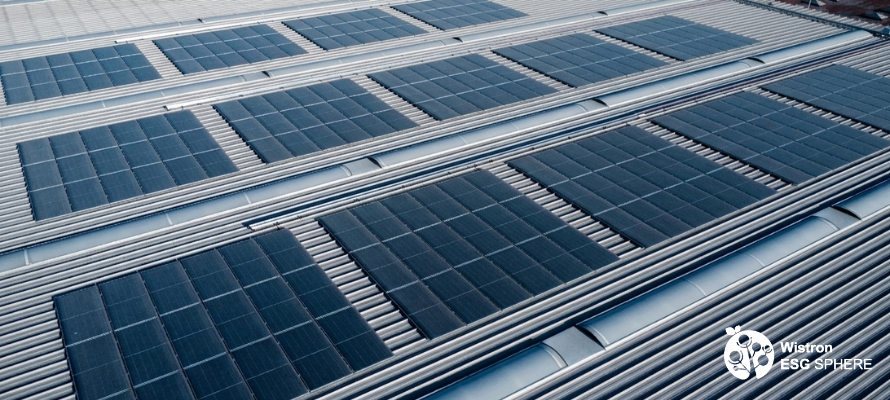
Wistron continues to optimize existing factory rooftops and available spaces across its global operations to expand solar power generation capacity, while establishing long-term partnerships with renewable energy providers in various regions. For overseas sites facing regulatory constraints or limited renewable electricity supply, Wistron adopts flexible energy portfolios to maintain steady progress in its energy transition initiatives.
Through sustained strategic evolution and cumulative actions, Wistron increased its global renewable electricity usage rate from 65% in 2023 to 80% in 2025. Notably, the expansion of on-site solar capacity at the Vietnam manufacturing facilities and the Mexico sites in 2025 played a critical role in achieving this milestone.
Leveraging AI and Digital Tools to Deepen Transformation Actions
Aligned with science-based decarbonization pathways, Wistron integrates AI-driven digital tools, its decarbonization management platform, and its internal carbon pricing mechanism into operational and investment decisions, embedding energy transition efforts into daily management practices.
Building on achieving an 80% renewable electricity usage rate in 2025, Wistron will continue to deepen its efforts through energy transition initiatives, efficiency improvements, and value chain collaboration. Through steady implementation, the Company aims to advance toward its 2030 interim targets and progressively realize its 2050 net-zero emissions vision.